
Ready to seek assistance with your US taxes?
Filing US taxes as an American abroad is complex. We help make it easy for you.


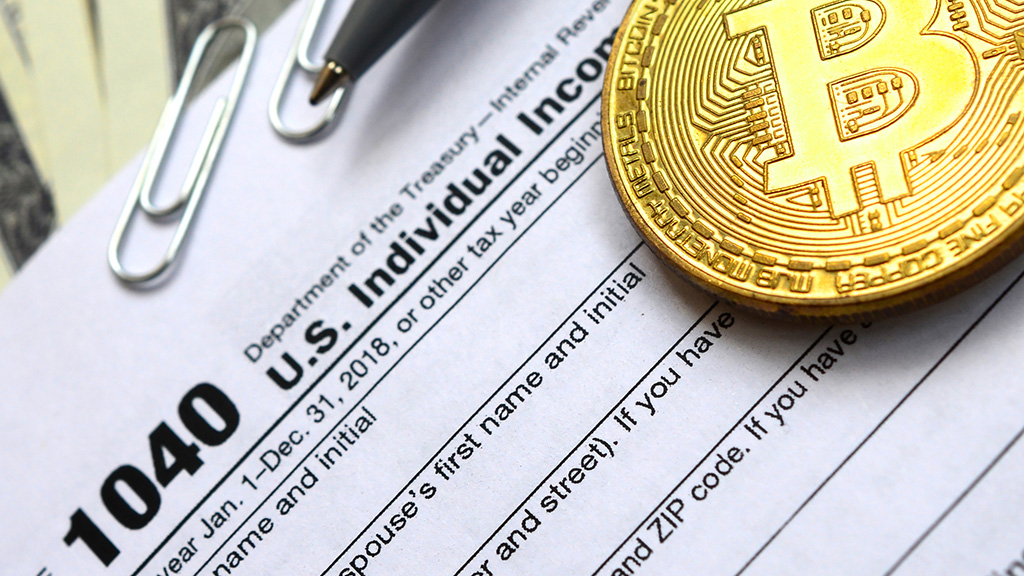
This article covers the tax challenges of crypto reporting and why Form 1099-B is not a solution to accurately report cryptocurrencies to the taxing authorities.
While the requirement to track and report traditional investments such as stocks, bonds, interests, dividends, and other personal investments is on the broker’s shoulders, this does not work the same way in the digital space.
On November 15, 2021, the president of the United States signed the Infrastructure bill, which issued new legislation in an attempt to address the tax reporting challenges of cryptocurrencies.
In simple terms, crypto exchanges in the United States will be required to issue 1099s and notify the IRS directly of crypto transactions happening on their platforms. This is similar to the way traditional brokers track stock and bonds.
At first glance, this seems like a simple solution. However, the technology architecture that cryptocurrencies are built in is very different from traditional brokerages. Therefore, receiving a 1099-B from a crypto exchange doesn’t account for the accounting challenges associated with cryptocurrencies.
The vast majority of people are unaware of how complex cryptocurrency tax reporting truly is. It is generally time-consuming and can be a headache for taxpayers with a big volume of transactions or use many exchanges and wallets.
At Online Taxman, we help crypto clients through this 10-step process to report crypto correctly.
Here are the detailed process steps:
First of all, businesses and individuals must account for all of their crypto activity. Start with making a list of all the exchanges and wallets used since you started trading crypto. This is more of an accounting challenge than a tax one.
Then the taxpayer need to analyze their entire trading history from the very beginning to determine how they acquired crypto:
After capturing how you acquired crypto units, you must track all crypto movements through the exchanges, crypto platforms, and decentralized wallets used since you started investing in crypto.
This includes:
This already sounds daunting. But it gets even more challenging.
Now that you have built up your entire transaction history, you should export it into a CSV file. You can do that on every exchange or directly through the blockchain explorers if you used decentralized wallets.
However, sometimes this step is not that simple. Some exchanges set exporting restrictions after reaching a certain transaction volume. Others simply restrict users from exporting historical data, or only allow data within a certain range to be exported.
If that happens, talk to an accounting firm that specializes in crypto so they can review the best course of action.
Many crypto traders will realize that none of the exported CSV files look the same. The exported information can also be in different languages or with different date formats.
All this makes it difficult to convert the reports to the same format without considerable spreadsheet experience.
This is the most challenging part. Most taxpayers do not understand what adjustments they need to make to report their crypto data on their tax return.
It is is important that crypto software properly reads the CSV files and accurately detects the taxpayer’s entire transaction history. An accounting firm that understands both traditional tax rules and the different types of crypto transactions can make a big difference here.
There are currently two tax accounting methods for cryptocurrencies that businesses and individuals can use:
The accounting method can easily be selected on the crypto tax software. Be aware, once a method is used, you cannot change it and must use the same approach moving forward. A tax professional can advise which method would be most beneficial for you.
Next, edited CSV files are imported into a crypto tax software. The software reconciles the trades based on the chosen tax accounting method. The IRS allows businesses and individuals to use different tax methods of accounting for crypto reporting.
If you are unsure how to use crypto tax software and rather have a tax professional do it, please reach out to us.
Once all the previous steps are completed, all crypto transactions are entered into IRS Form 8949. This Form 8949 is filed together with your income tax return.
Lastly, taxpayers should store all the exported CSV files and final reconciliations, as the IRS might want to take a look at how this was calculated.
In addition, the IRS has also imposed requirements upon taxpayers that want to use the Specific Identification accounting method. Therefore, taxpayers should also record the following information on their supporting files:
To sum up, the information reported on a 1099 and traditional reconciling financial data from bank accounts is not a solution to the digital space accounting challenges. Furthermore, many tax accountants are not familiar with correctly reporting crypto taxes.
If you are looking for a tax accounting firm that specializes in this industry and can help you accurately reconcile crypto transactions for income tax purposes, you came to the right spot.
Online Taxman is a boutique tax accounting firm specializing in international taxation for expats and international entrepreneurs. Our growing team of experienced tax professionals brings expertise from Big 4 accounting firms as well as private practices in international locations.
We help our clients with more than just tax returns. Our expertise in cryptocurrency taxation, international business structuring, financial advisory, pension classification, and more makes us a leading choice for all your expat CPA needs.
Filing US taxes as an American abroad is complex. We help make it easy for you.